M. Joy
Gorence
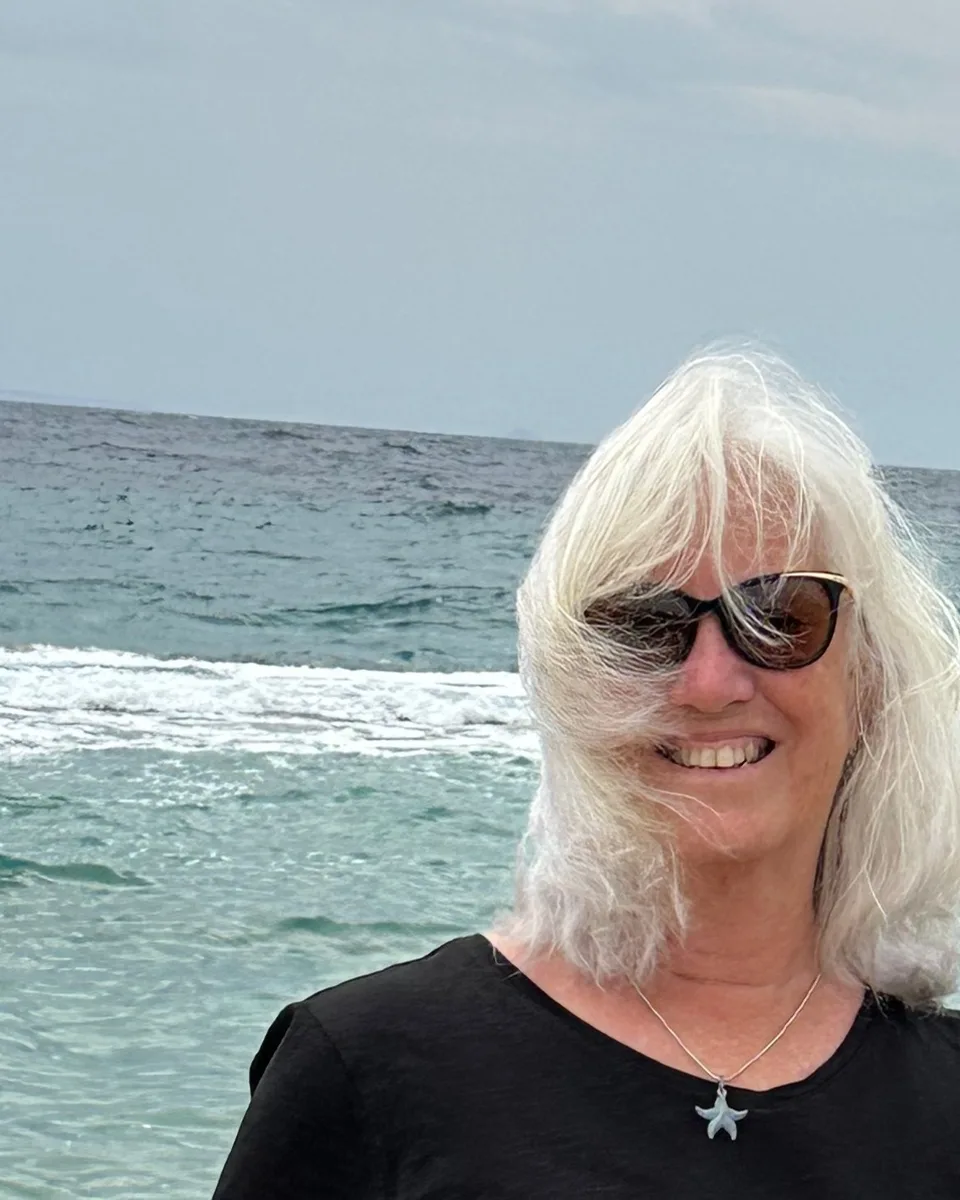
Almost three-quarters of a century ago, I made my way into the world earlier than expected. In the company of less than one percent of the world's population, I arrived with a caul — a piece of my amniotic sac, a talisman of protection. It was then that my journey began.
My travels, however, did not begin in earnest until my teaching assignment onboard the Captain Scott, a sail-training ship procured for a year by Oceanic Schools. Before embarking on my overseas journey, my mother gave me a locket securing a piece of my caul within it. Before this, I had no knowledge that my birth was accompanied by a talisman and the superstitions and folklore associated with it.
Since ancient times, a caul has been valued by sailors as a protective charm against drowning and other dangers at sea. There are some who believe that those born with a caul are destined to travel, see adventures, and explore other cultures.
Perhaps there is some truth to those superstitions.
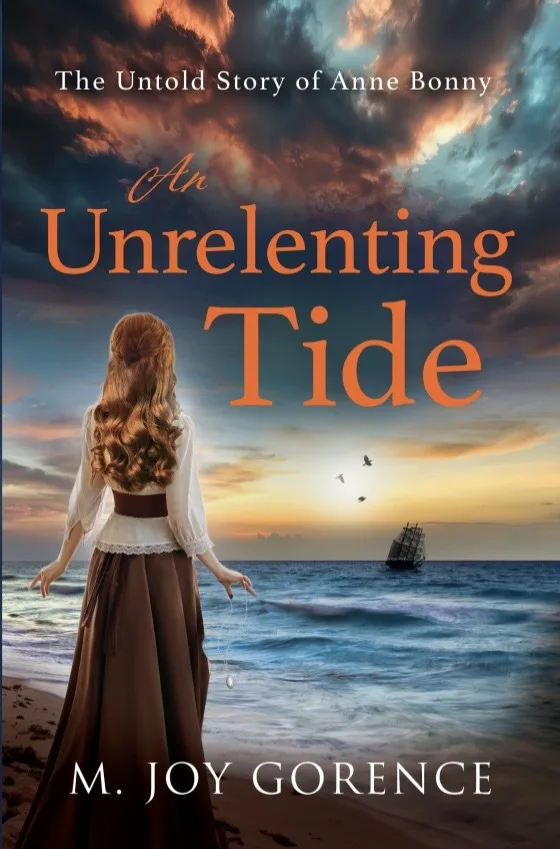
History remembers Anne Bonny as a footnote in a ledger of hanged men — a red-haired girl in trousers, then silence. This novel is the silence, restored. With an unorthodox upbringing in Kinsale, County Cork, to becoming a member of society in Charleston, Carolina, to starting a new life in New Providence, Nassau, it is a story of a young woman who refused the shape the world cut out for her, and the tide she set in motion.
“William, you’ll have your hands full in no time at all. She has the charm of Aphrodite and the wit of Minerva.” — from the novel
“Hear tell, no god-fearing person would associate with the likes of Blackbeard,” Minnie said in a voice just above a whisper.
Anne implored, “You must promise you won’t tell Father.” She reached for the silver locket that hung around her neck and released the breath she didn’t know she was holding when Minnie hesitantly nodded her acquiescence. She gave Minnie a quick hug. “I promise, this will be the end of it.”
The sea often withholds its mysteries from land-locked people while sailors maintain an eternal liaison with her. In the past, women had been excluded from this love affair with the sea, but as a female crew member on the wooden topgallant-schooner, Captain Scott, I experienced a world dominated by her deep blue waters. Among 29 men and 14 other women, I left Buckie, Scotland and began my voyage through the North Sea to the Atlantic and through the Mediterranean. A British Captain, First Mate, and Engineer; a Norwegian Second Mate; and a Swedish Bosun instructed and guided us for the next nine months.
As the tide’s roar grew louder on the day of departure, all moveable items on deck and below were secured before leaving northern Scotland’s heathered hills and cliffs. Dressed in bright yellow foul-weather gear and black deck boots, we lined the fore and aft decks of the 177-foot schooner waiting for the tide to signal us on our way. The captain ordered us to stow the mooring lines that had held our ship secure to her home port. With the next order, we heaved on the thick hemp lines to raise the sails. The ship gradually progressed toward the breakwaters of Moray Firth. Passing through its protective cove, the salt-dampened air glazed our woolen hats and unprotected hands and faces. The small white caps of swelling waves elevated the shapely black hull as the captain, standing on the enclosed charthouse, boomed orders through the biting winter air. With burning red hands fighting the shocking cold, we raised the fore, main, and mizzen sails while the bosun struggled to maintain control of the helm. Even though the sea did her best to upset us, the wind, billowing our white gaff sails, helped maintain our balance and propelled us toward the North Sea.
With sails set and lines stowed, I had the next few hours of twilight and evening to become acquainted with my surroundings. Orion’s belt glittered above while the glowing sparks of phosphorescence marked our path in the sapphire waters. I had previously explored the galley, the library, the banyard, the wardroom and now remained on deck as night approached. The heartbeat of the sea engulfed me.
As we headed toward the Bay of Biscay, the air grew colder, the seas became rougher, and the cracking and groaning of the ship filled any lapses of activity that existed. Hour after hour enormous breakers pushed against the starboard side raising the hull to the waves’ peaks. As abruptly as the waves rose, they vanished, making us slide uncontrollably with the sea’s eclectic movements.
My body grew angry at the sea’s harsh onslaughts. I was like a butterfly in a hurricane.
Days and nights passed while the sea maintained her hostile mood. The captain would not allow us to give in to our discomfort. He ordered us on deck at various times of the day and night to set sails, tack the ship, lower the jibs, furl sails, and climb the rigging just to keep us active.
When we reached the French coastline, red and white flashing lights, sending greetings and warnings, pierced the darkness.
As we arrived at the midpoint of the Bay of Biscay, the weather began to calm. The waters smoothed into glass reflecting surfaces, and the sun filled our days with warmth and gentle breaths of air. The white sprays and the sleek grey backs of porpoises surfaced through the azure waters. As they played, like undulations of sunlight, I wondered if it were true that their frequent leaping was a sign of rising winds and clearing skies.
We altered our course and sailed into the Atlantic until we maneuvered through the Strait of Gibraltar into the Mediterranean Sea. During the next seven months, I fell in love with the sea. She was harsh and fierce during gales and storms, and gentle and comforting during calm, sunny days.
Entering a foreign port was exhilarating, but the sea would soon beckon us back.
After leaving several ports, our concept of time changed. Twenty-four-hour watches kept the ship a hub of activity. Hours passed, bells echoed changing watches, and only the sea and her moods captured our undivided attention. Time moved quickly as we sailed along North Africa and back to the Atlantic. The days of winter grew warmer and the sea’s waters sparkled with the life of spring.
As weeks changed into months, life on the sea revealed itself to be a natural union between man and nature. I experienced the changing moods and emotions with the sea. I became enthralled with her. She enchanted me and left her everlasting impression.
on the Golden Age of Piracy



Book reviews and blurbs, essays, poetry, and the occasional comments on various subjects — all over on Medium.
Read on Medium →I do try to answer every letter, eventually.
Email Me →